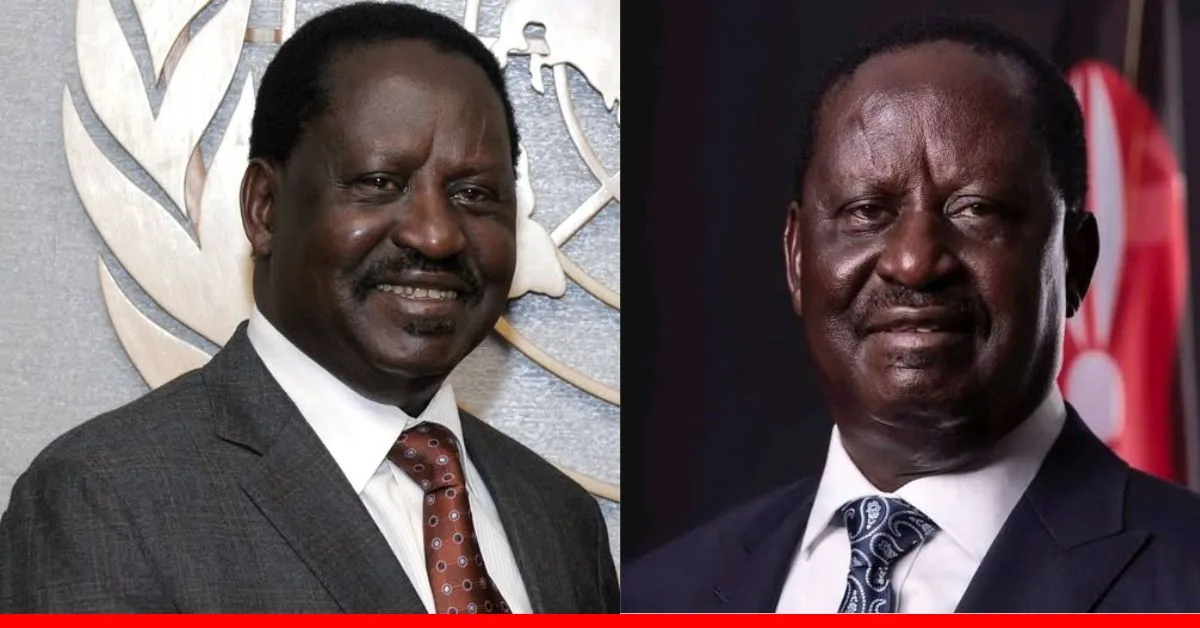
Kenya is in mourning following the death of Raila Amolo Odinga, the former Prime Minister and iconic opposition leader, who passed away on Wednesday, October 15, 2025, at the age of 80. Odinga died of a heart attack while receiving medical treatment in Kochi, India, where he had been admitted for specialized care.
His sudden demise has left a deep void in Kenya’s political landscape, with tributes pouring in from across the country and beyond. In Kisumu, his hometown, streets fell silent as residents gathered to honor the man many called “Baba” — a symbol of resilience, reform, and unwavering patriotism.
A Legacy of Defiance and Reform
Born in 1945 to Jaramogi Oginga Odinga, Kenya’s first Vice President, Raila inherited a legacy of political activism. He rose to prominence in the 1980s as a fierce critic of the one-party regime under President Daniel arap Moi. His involvement in the 1982 coup attempt led to multiple detentions without trial, but it also cemented his reputation as a fearless reformist.
Raila was instrumental in Kenya’s transition to multi-party democracy, co-founding the Forum for the Restoration of Democracy (FORD) and later leading the Orange Democratic Movement (ODM). His political career spanned over four decades, during which he ran for president five times — in 1997, 2007, 2013, 2017, and 2022 — each time galvanizing millions of supporters.
In 2008, following the disputed 2007 election, Raila was appointed Prime Minister in a power-sharing deal brokered by international mediators. His tenure focused on constitutional reform, culminating in the 2010 Constitution, which remains one of his most enduring legacies.
The People’s President
Though Raila never ascended to the presidency, many Kenyans regarded him as the “People’s President.” His campaigns championed electoral justice, devolution, and inclusivity. He was a masterful orator, able to connect with ordinary citizens across ethnic and regional lines.
In recent years, Raila surprised many by forging a political truce with former rival President Uhuru Kenyatta, known as the “Handshake”, which aimed to heal national divisions and promote unity. He later supported constitutional amendments under the Building Bridges Initiative (BBI), though the effort was thwarted by the courts.
A Nation Reflects
Raila’s death has triggered an outpouring of grief. His brother Oburu Odinga, visibly shaken, shared emotional details of their last phone call, saying, “I don’t have strength. Raila was our pillar”. Matatu passengers reportedly broke down in tears upon hearing the news, and political leaders across the spectrum have called for a national day of mourning.
As funeral arrangements begin, Raila Odinga will be remembered not just as a politician, but as a symbol of Kenya’s democratic struggle — a man who endured detention, betrayal, and defeat, yet never gave up on the dream of a better Kenya.