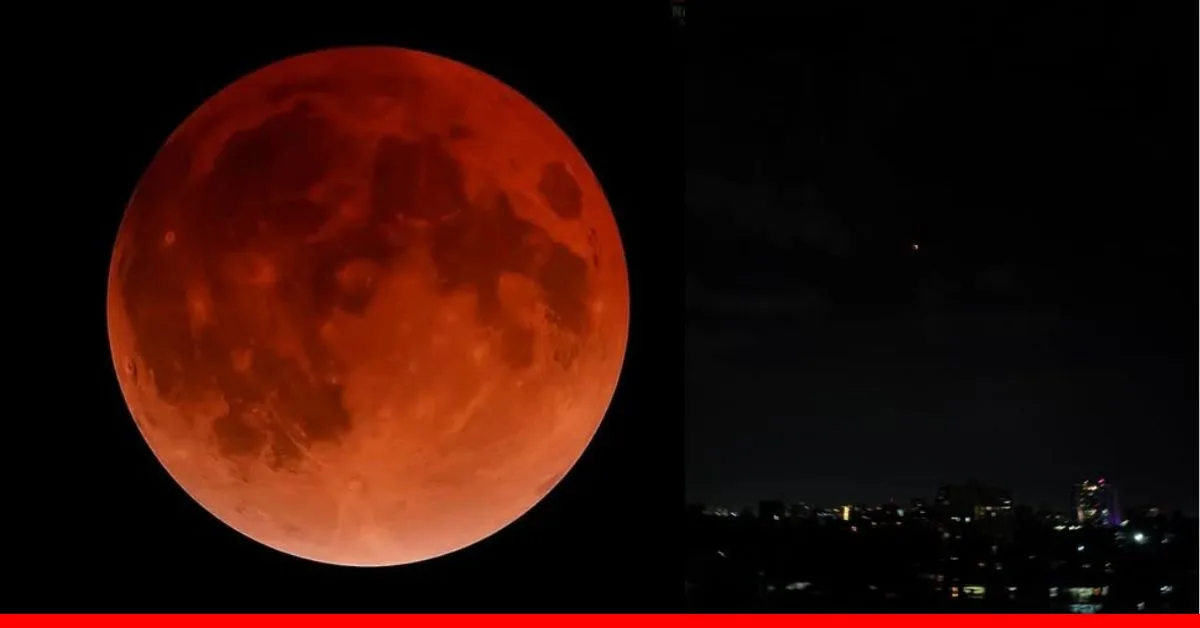
Nairobi, 7th September, 2025 – Tonight, the skies above Nairobi hosted a breathtaking celestial show. Stargazers across the city were treated to the awe-inspiring sight of a full lunar eclipse—a stunning reminder of the cosmic dance that unfolds above us. For a precious window of time, the familiar face of the moon was transformed, glowing with a deep, coppery red that captivated everyone from families on their balconies to astronomers with their telescopes.
The event began at 8:30 PM EAT and unfolded over several hours, culminating in the dramatic total phase, where the moon was entirely cast in shadow, lasting approximately 90 minutes.
What Was a Lunar Eclipse?
A lunar eclipse occurred when the Earth moved directly between the Sun and the Full Moon. Our planet blocked the Sun’s light, casting its shadow into space. This shadow has two parts: a lighter, outer shadow called the penumbra, and a darker, inner core called the umbra.
During the total lunar eclipse we witnessed, the Moon passed completely into Earth’s umbral shadow. It didn’t disappear from view because sunlight scattering through Earth’s atmosphere—a process called Rayleigh scattering—filtered out the blue light and bent the red light onto the Moon’s surface. This is what created the mesmerizing “Blood Moon” effect, with its stunning shades of orange, copper, and deep red.
Why Was This Eclipse Special for Nairobi?
Nairobi, and Kenya as a whole, was in a prime location to view the entire event from beginning to end. Unlike some celestial events only visible from specific parts of the world, this eclipse was perfectly positioned for viewers in Africa. The clear night sky provided an unforgettable view of the entire celestial sequence, from the first subtle nibble to the deep red totality and the moon’s eventual return to full brightness.
When is the Next One? Mark Your Calendars!
If you missed this one or are already eager to experience another, you’ll need a little patience. These events are special because they don’t happen every month; the alignment of the Sun, Earth, and Moon must be perfect.
The next total lunar eclipse visible from Kenya is scheduled for December 31, 2026.
We will be ringing in the New Year of 2027 with a spectacular “New Year’s Eve Blood Moon.” It promises to be a truly magical and symbolic way to end the year. While that seems far away, there will be partial and penumbral eclipses in the meantime, but none will match the dramatic beauty of a total eclipse.
So, mark your calendars for December 31, 2026. It will be a celestial celebration you won’t want to miss.
Did you see the eclipse? What did you think? Share your photos and experiences in the comments below!